
It’s harder to follow conversations in busy rooms, the TV seems quieter and getting to a clinic feels like more work than it should. For many adults and for families arranging care for an older relative, these are the moments when a home hearing check starts to seem sensible.
A home hearing test for adults is a professional hearing assessment carried out in your own home by a hearing professional. It is different from an app or an online screening tool. This article explains who it suits, what happens during a visit, how reliable it is and what usually follows, so you can decide if it’s right for you.
What is a Home Hearing Test for Adults?
A home hearing test for adults is a hearing assessment carried out by a qualified hearing professional who visits you at home and brings portable equipment. It is a professional home visit, not an online self-test or a phone app.
The goal is to assess your hearing in each ear and discuss the results’ impact on your daily life. The professional can then explain whether any support, monitoring or medical advice is appropriate.
Who Can Benefit From a Home Hearing Test?
Home appointments can suit many adults and the reasons are often practical rather than medical. A home visit may be particularly convenient for:
- Older adults who find clinic appointments tiring
- People with limited mobility
- People who find travelling difficult
- People who rely on family or carers for transport
- People who feel more comfortable in familiar surroundings
- Anyone who simply prefers the convenience and privacy of being assessed at home
Home visits are not only for people who are elderly, unwell or housebound. Working adults and busy parents often choose them because they save a trip. Families also arrange them for a parent who has been reluctant to go to a clinic and a relative can usually sit in on the appointment.
Signs You May Need a Hearing Test
Hearing often changes slowly, so many people adjust without realising. Relatives sometimes notice first. Everyday signs that may be worth checking include:
- Frequently asking people to repeat themselves
- Finding speech hard to follow when several people are talking
- Struggling to understand conversation in restaurants or other noisy places
- Turning up the television or radio volume
- Feeling that other people mumble
- Missing parts of telephone conversations
- Finding it harder to tell where a sound is coming from
- Friends or family mentioning a change before you have noticed it yourself
These signs do not diagnose hearing loss. Other things, including earwax, can cause similar difficulties, which is one reason a proper assessment is useful.
Some symptoms need prompt medical attention rather than a routine hearing test. If you notice sudden hearing loss, a sudden major change in your hearing, significant ear pain or discharge from the ear, contact your GP or NHS 111 promptly.
What Happens During a Home Hearing Test?
The exact steps depend on the provider, the equipment they carry and your individual circumstances. The outline below describes what commonly happens rather than a fixed procedure and a provider can explain its own process when you get in touch.
A conversation about your hearing
The appointment usually begins with a discussion. The hearing professional will ask what you have noticed, when it started and which situations are hardest. Expect questions about your general health, any ear problems, medicines, noise exposure and any hearing aids you already use. Examples from daily life help, such as the television or a busy family meal. You do not need to remember every detail.
Looking at your ears
The professional will normally look into your ears, often with a small handheld light or camera, to check for anything that could affect the test, such as earwax. If something needs attention, they should explain the options and may suggest you see another clinician.
Testing your hearing
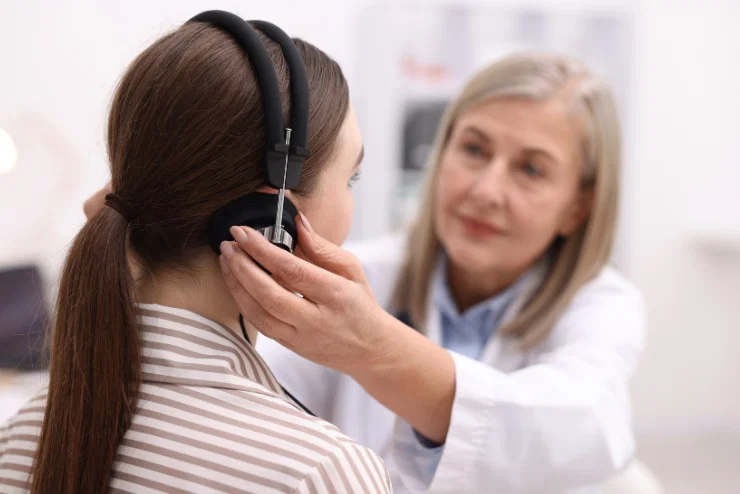
Your hearing is then assessed using portable equipment. Commonly, you listen to quiet tones or speech through headphones and respond when you hear them. Each ear is tested separately so the professional can compare them. Some assessments also include listening to words at different volumes. The professional should explain each part beforehand and you can ask them to pause.
Talking through your results
Afterwards, the professional should explain the findings in plain English, usually relating them to the situations you described. This is your chance to ask questions and to have a relative ask theirs. The visit finishes with a discussion of sensible next steps, covered below.
Ready to Find the Best Hearing Aids?
Hearing aids from £1,295. Free hearing test. No waiting list.
Book your FREE hearing test at our Stafford clinic or request a home visit across Staffordshire. Get expert advice and personalised hearing aid recommendations from our experienced audiologists.
Call 01785 331560Compare the Best Hearing Aids 2026How Accurate is a Home Hearing Test?
A professionally conducted home hearing test can give reliable information, but its accuracy depends on how it is carried out. A professional assessment is fundamentally different from an online screening tool or app, which cannot control the equipment, the sound levels or the room.
Reliability depends mainly on three things: appropriate professional equipment, correct test procedures and a suitably quiet environment. Background noise from a television, traffic or a busy household can affect results, particularly for quieter sounds. Even a ticking clock or a neighbour’s music can matter.
For this reason, the hearing professional decides whether your home is suitable on the day. If a room is too noisy, they may change where the test takes place or suggest a further assessment elsewhere. It would be wrong to claim that a home test is identical to a clinic test in every case. A better summary is that a well conducted home assessment can be dependable when conditions are right.
How to Prepare for Your Hearing Test at Home
Preparation is straightforward. A few simple steps help the appointment run smoothly:
- Choose the quietest suitable room, ideally with a comfortable seat
- Reduce avoidable background noise by switching off the television, radio and washing machine
- Write down your hearing concerns and any questions
- Have your hearing aids ready if you already wear them, along with chargers or batteries
- Note any medicines or ear problems you would like to mention
- Consider asking a partner, family member or carer to join you if that helps
There is no need to tidy the whole house. A quiet space and a few minutes to gather your thoughts are enough.
Home Hearing Test vs. Hearing Test at a Clinic
| Home hearing test | Clinic hearing test | |
|---|---|---|
| Location | Your own home | The provider's premises |
| Travel | None needed | Travel and parking usually required |
| Environment | Familiar, but noise levels depend on your home | Purpose built rooms with more control over noise |
| Convenience | The appointment comes to you | Fixed location, which suits those who travel easily |
| Professional assessment | Carried out by a hearing professional using portable equipment | Carried out by a hearing professional, sometimes with fixed equipment |
| Suitability | Helpful for limited mobility, reliance on carers or a preference for home | Helpful where controlled conditions or additional testing are needed |
| Access to facilities | Limited to what the professional can bring | Wider range of equipment and rooms on site |
Neither setting is better for everyone. The right choice depends on your circumstances, your preferences and what your assessment needs. Some people begin at home and are later invited to a clinic if additional testing is required. Others prefer a clinic every time. Both are reasonable choices.
What Happens After Your Home Hearing Test?
After the assessment, the hearing professional should explain your results clearly and without jargon. What happens next depends on what was found. Possible outcomes include:
- No immediate action
- Monitoring your hearing over time
- Further assessment
- Advice on communication and listening in everyday situations
- Discussion of hearing aids, where appropriate
- Referral or further medical assessment, where appropriate
Not everyone with some difficulty needs hearing aids and the outcome is never decided in advance. If hearing aids are discussed, our guide to the best hearing aids in the UK for 2026 compares NHS and private options and explains how to choose, which can help you prepare questions.
If a medical cause is suspected, the professional should suggest you speak to your GP. You should leave the appointment knowing what was found and what your options are and you should not feel rushed to decide anything on the day.
How Often Should Adults Have Their Hearing Tested?
There is no single interval that suits every adult. How often you should have your hearing checked depends on your age, previous results, any changes you have noticed, noise exposure at work or in leisure time, existing hearing difficulties and professional advice.
If you already have hearing loss or use hearing aids, Mi Hearing recommends a check at least once a year so that support stays effective. Your own hearing professional may suggest a different interval.
Noticing change matters more than following a timetable. If your hearing seems different from before, arrange an assessment rather than waiting for a set date. Sudden changes should be treated differently, and medical advice should be sought promptly, as explained earlier.
Book a Professional Home Hearing Test with Mi Hearing
Mi Hearing provides professional hearing care at home for adults. According to the information Mi Hearing publishes, its hearing specialists bring portable diagnostic equipment to your home. A full hearing test takes approximately one hour and other appointment types usually take 30 to 60 minutes. MI Hearing states that its home visits are free of charge and mobile payment facilities are available if needed.
Home appointments are not limited to first assessments. Mi Hearing also offers hearing aids, fittings, adjustments, servicing and regular check-ups at home, which can help if travelling to appointments is a barrier.
Mi Hearing has historically carried out home visits in Staffordshire, Derbyshire and Shropshire and will travel further, so it is worth asking about your area. When you book hearing test appointments with Mi Hearing, you can also raise any questions you have after reading this article.
To discuss a home hearing assessment and confirm whether the service is available where you live, call 01785 331560, email mail@mihearing.co.uk or use the contact page.
Book Your Hearing Test in Staffordshire
If you are experiencing hearing difficulties, booking a hearing test is the first step. Our team at Mi Hearing will assess your hearing and help you find the best hearing aids for your needs.
Book Your Free Hearing TestFrequently Asked Questions about Home Hearing Tests
Yes. A hearing professional can carry out a hearing assessment in your home using portable equipment. The visit typically includes a discussion about your hearing, a look at your ears and testing of each ear. The professional will decide on the day whether your home environment is suitable for testing.
A professional home assessment can be dependable when it uses appropriate equipment, correct procedures and a quiet room. It is very different from an app or online screening tool. If conditions are not suitable, the hearing professional may recommend further assessment in another setting.
Appointment times vary between providers. Mi Hearing states that a full hearing test takes approximately one hour, while other home appointments take around 30 to 60 minutes. Allow a little extra time for questions, particularly if a relative is joining you.
Preparation is minimal. Choose a quiet room, switch off the television and radio and note down your concerns and questions. If you use hearing aids, have them available. Nothing else is normally required and you do not need to tidy the house.
In most cases, yes. Many people find it helpful to have a partner, relative or carer with them, as they can describe changes they have noticed and help remember the advice given. It is sensible to mention this when arranging the appointment.
The hearing professional will explain the results and discuss your options. These may include monitoring, further assessment, communication advice or hearing aids where appropriate. If a medical cause is suspected, they may suggest speaking to your GP. You decide what to do next.