
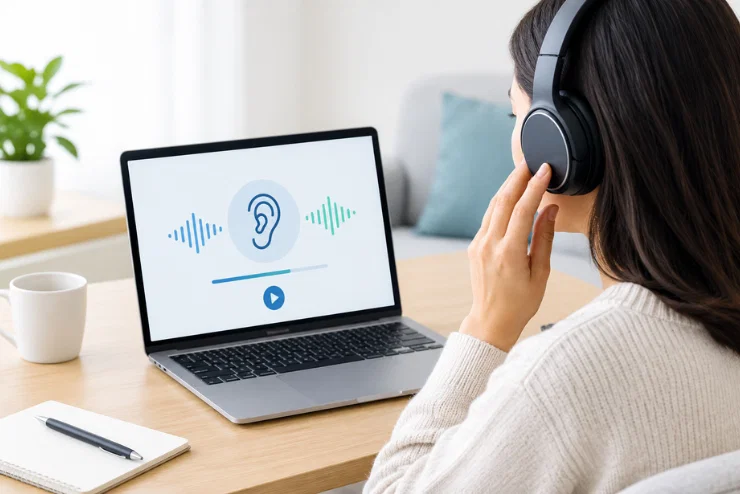
What is an Online Hearing Test?
An online hearing test is a short screening tool that you complete on a phone, tablet or computer. The NHS notes that simple online hearing tests are available for adults aged 18 and over and that the result can tell you whether you need a face-to-face hearing test.
Not every test works in the same way. Some play tones at different pitches to each ear. Others, such as the RNID hearing check, measure how well you understand speech when there is background noise. Because the methods differ, two tests may highlight different things.
A clinical hearing assessment, carried out by an audiologist or another hearing specialist, looks at your hearing in far more detail and can help explore possible causes.
How to Take a Hearing Test Online at Home
To take a hearing test at home, choose a quiet room, use headphones if the test recommends them, follow the instructions carefully and treat the result as guidance rather than a diagnosis. In order:
- Check that the test suits you, including age limits and tinnitus warnings.
- Find a quiet room.
- Set up headphones and volume as instructed.
- Complete the test without rushing or guessing.
- Read your result and decide your next step.
Find a Quiet Room
Background noise from traffic, a television or household appliances can mask the quiet sounds a test plays, which may make your hearing seem worse than it is. Close windows, switch off other devices and ask others for a few minutes of quiet. RNID advises taking its check somewhere you will not be disturbed.
Use Suitable Headphones
RNID says headphones or earphones give a more accurate result than built-in speakers. Headphones also allow some tests to check each ear separately. Recommendations differ between providers, so follow the guidance for your chosen test. Home equipment is not calibrated like clinical equipment, so device type, headphone quality and audio settings can all affect results.
Follow the Test Instructions
Read the instructions before you begin, set the volume as directed and avoid changing it halfway through. Respond honestly rather than guessing and take the test when you can concentrate. If you have tinnitus, note that RNID’s check plays constant white noise and advises against taking it if you would find that uncomfortable.
Review Your Results
Most tools give a broad message, such as whether you may have signs of hearing loss and whether to see a professional. Treat this as a prompt to act, not a measurement of your hearing. Scores and wording differ between tests, so do not compare results from different tools or use them to choose a hearing aid.
Ready to Find the Best Hearing Aids?
Hearing aids from £1,295. Free hearing test. No waiting list.
Book your FREE hearing test at our Stafford clinic or request a home visit across Staffordshire. Get expert advice and personalised hearing aid recommendations from our experienced audiologists.
Call 01785 331560Compare the Best Hearing Aids 2026Are Online Hearing Tests Accurate?
Online hearing tests can give a useful first indication, but they are not a diagnosis. Accuracy depends on the test method, your equipment, your environment and you.
Key limitations include:- Background noise can interfere with quiet sounds.
- Phones, computers and headphones vary and home audio is uncalibrated.
- A screening checks only certain things, such as tones or speech in noise.
- It cannot look inside your ears, so it cannot identify issues such as earwax build up or a blockage behind the eardrum.
What Do Your Online Hearing Test Results Mean?
A result is a signpost, not a verdict.
If Your Results Suggest No Hearing Concerns
This is encouraging, but it is not a guarantee of normal hearing in every situation. If you still struggle with conversations, especially in noisy places, or others notice changes in your hearing, seek professional advice anyway. As the NHS points out, someone else may notice a problem before you do.
If Your Results Suggest Possible Hearing Loss
Booking a professional hearing assessment is a sensible next step. Only a specialist can confirm whether hearing loss is present, which ears are affected and what might be causing it. An online result cannot tell you the type or severity of hearing loss and it is not a reason to buy a hearing aid by itself.
Online Hearing Test vs. Professional Hearing Assessment
| Feature | Online hearing screening | Professional hearing assessment |
|---|---|---|
| Main purpose | Gives a quick indication of whether to seek advice | Examines your hearing in detail and explores causes |
| Where it takes place | At home, on your own device | Clinic, hospital, pharmacy, optician or a home visit |
| Equipment used | Your device and headphones | Specialist equipment used by a trained professional |
| What it can assess | Limited, depending on the tool | Can include tones, speech and eardrum movement |
| Ear examination | No | Yes, where the service includes it |
| Type of result | General guidance, not a diagnosis | Discussed with a specialist, with next steps |
| Follow up | Consider if results or symptoms raise concerns | Treatment, referral, tests or monitoring as needed |
When Should You Book a Professional Hearing Test?
Consider an assessment if you notice any of the signs the NHS lists:
- Difficulty following conversations
- Frequently asking people to repeat themselves
- Struggling to hear when several people are talking
- Turning the television up more than others prefer
- Difficulty hearing speech in noisy places
- Ongoing concern about changes in your hearing
You can speak to a GP, who can refer you to an audiologist for an NHS test.
Seek urgent medical advice: If you have sudden hearing loss in one or both ears, your hearing has been getting worse over the last few days or weeks, or you have hearing loss with earache or discharge from the ear. Ask for an urgent GP appointment or get help from NHS 111. It may not be serious, but it may need prompt treatment. Do not take an online test first.
Can You Check Your Hearing Online for Free in the UK?
Yes. Free screening tools are available in the UK. RNID, an independent charity, offers a free online hearing check that takes about three minutes and the NHS links to it. Features differ between providers.
A free screening is different from a professional assessment. Pharmacies and opticians often offer free hearing tests, but you may pay for treatment such as hearing aids. A specialist visit is different from a self-test. MI Hearing offers home hearing tests in Staffordshire using portable equipment and its website describes these visits as free of charge. If an assessment suggests hearing aids may help, our guide to the best hearing aids in the UK for 2026 outlines the options.
Book Your Hearing Test in Staffordshire
If you are experiencing hearing difficulties, booking a hearing test is the first step. Our team at Mi Hearing will assess your hearing and help you find the best hearing aids for your needs.
Book Your Free Hearing TestFrequently Asked Questions about Online Hearing Tests
Yes. Free tests are available in the UK, including the RNID hearing check, which the NHS links to. A free screening does not replace a professional assessment and any treatment or hearing aids that follow may involve separate costs.
It gives an initial indication, not a diagnosis. Accuracy depends on the test method, your headphones, volume settings and surroundings. A screening cannot examine your ears, so a reassuring result does not rule out every hearing problem.
Many online hearing tests can be taken on a phone, but requirements differ, so read the instructions first. Headphones or earphones usually give a more reliable result than built-in speakers and a quiet room matters.
Not always, but they are usually recommended. RNID says headphones or earphones give a more accurate result than built-in speakers. Providers differ on the type of headphones, so follow the guidance for your chosen test.
It depends on the test. With headphones, some tools check each ear separately, while speakers usually cannot. A screening may suggest signs of difficulty, but only a professional assessment can confirm which ears are affected and why.
Arrange a professional hearing assessment. If your hearing dropped suddenly, is worsening over days or weeks, or comes with earache or discharge, seek urgent advice from a GP or NHS 111. Do not buy a hearing aid based on a screening alone.
No. An online test is a screening tool. A professional assessment is carried out by a trained specialist who can take your history, examine your ears and use appropriate tests.
Take the Next Step towards Better Hearing
An online hearing test is a convenient way to start thinking about your hearing health, as long as you remember it is a screening, not a diagnosis. If your result raises concerns, or you feel your hearing has changed, a professional assessment gives clearer answers.
To discuss your options, contact the MI Hearing team and ask about appointments at the Stafford clinic or at home. This article offers general information and is not individual medical advice.