
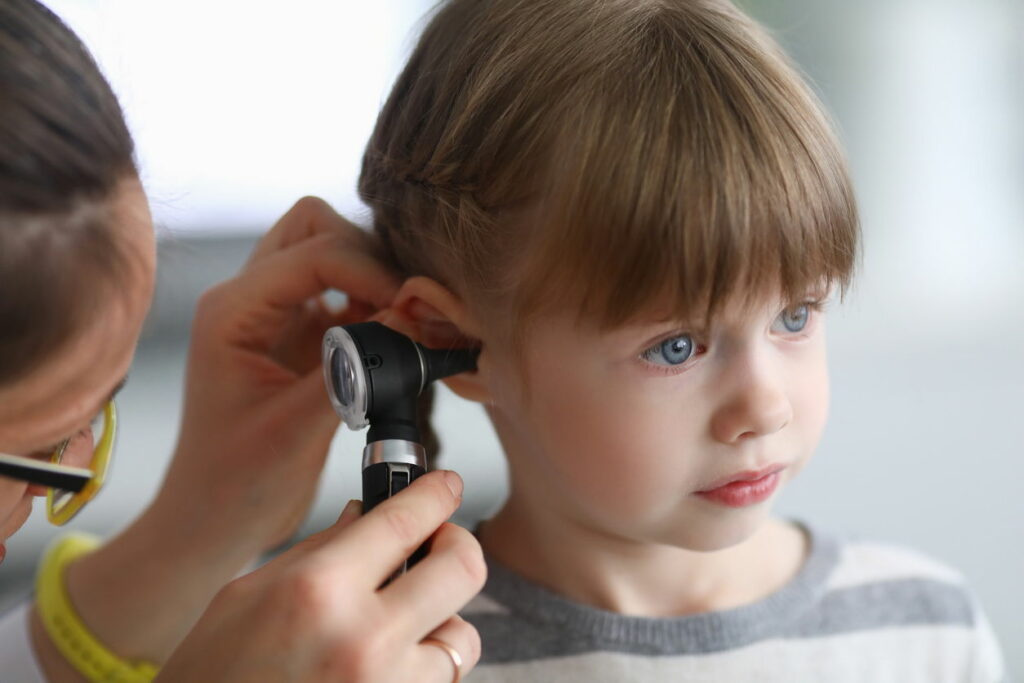
Hearing is a critical component of a child’s development, influencing their speech, language, social skills, and academic performance. Detecting hearing issues early ensures children receive the support they need to thrive. Hearing aid tests for children are designed to identify and address hearing loss promptly.
Here’s what parents should know about the signs of hearing loss and what to expect during a hearing test.
Recognising the Signs of Hearing Loss in Children
Early detection of hearing loss can significantly affect a child’s development. Parents and caregivers should be aware of the common signs that may indicate hearing problems, which can vary by age.
Infants (0-12 months):
- Lack of response to loud noises.
- Failure to turn towards sounds after 6 months of age.
- No babbling or reduced vocal play by 7 months.
- Not responding to their name by 12 months.
Toddlers (1-3 years):
- Delayed speech development.
- Difficulty following simple commands.
- Frequent inattentiveness or difficulty understanding speech.
- Preferring louder volumes on the TV or other devices.
Preschoolers (3-5 years):
- Difficulty in articulating words.
- Often saying, “What?” or “Huh?”
- Trouble hearing in noisy environments.
- Frustration when trying to communicate.
School-Age Children (5+ years):
- Struggling academically, especially with language-based subjects.
- Difficulty hearing teachers or peers.
- Complaints of ear pain or ringing in the ears.
- Withdrawal from social interactions.
What to Expect During a Hearing Test
If you suspect your child has hearing loss, scheduling a hearing test with an audiologist specialising in pediatric care is important. Here’s what you can expect during the process:
1. Initial Consultation: The audiologist will start with a detailed medical history and a discussion about any signs or symptoms of hearing loss you’ve observed. This helps the audiologist understand potential risk factors, such as family history, premature birth, or frequent ear infections.
2. Physical Examination: The child’s ears will be physically examined to check for any visible issues, such as earwax buildup, infections, or structural abnormalities that might affect hearing.
3. Behavioral Hearing Tests:
- Visual Reinforcement Audiometry (VRA): For infants and toddlers, VRA involves training the child to respond to sounds by turning towards them, with visual rewards like lights or toys.
- Play Audiometry: For preschoolers, this test involves engaging the child in a game where they perform a task (e.g., dropping a block) in response to hearing a sound.
4. Objective Hearing Tests:
- Otoacoustic Emissions (OAEs): This test measures sound waves in the inner ear. A small probe is placed in the ear canal, and sounds are played. The probe measures the ear’s response to these sounds.
- Auditory Brainstem Response (ABR): This test assesses the hearing nerve and brain pathways. Electrodes are placed on the child’s head to record brain wave activity in response to sounds. It is often used for newborns or when behavioural tests are inconclusive.
5. Tympanometry: This test evaluates the function of the middle ear. It measures how the eardrum responds to changes in air pressure, helping to identify fluid buildup or eustachian tube dysfunction.
6. Hearing Aid Fitting: If the tests indicate a hearing aid is needed, the audiologist will discuss the options and proceed with fitting the device. Hearing aids for children are typically designed to be durable and adaptable to their growing ears.
After the Hearing Test:
Follow-Up and Support: After a hearing test, regular follow-ups are crucial to monitor the child’s hearing and ensure the hearing aids are functioning properly. Support services, including speech therapy and educational accommodations, may also be recommended to assist in the child’s development.
Parental Guidance: Parents will receive guidance on how to help their child adapt to using hearing aids, maintain the devices, and foster a supportive home environment that encourages communication and learning.
Final Words
Early detection and intervention are key to effectively managing hearing loss in children. By recognising the signs and knowing what to expect during a hearing test, parents can take proactive steps to ensure their child’s auditory health. Regular hearing screenings, especially if there are risk factors or concerns, can significantly impact a child’s overall development and quality of life.
If you have concerns about your child’s hearing, don’t hesitate to schedule a hearing test. Early action can make all the difference in helping your child hear, communicate, and thrive.
Schedule Your Child’s Hearing Test Today
- Contact an Audiologist: Find a specialist in pediatric hearing care to schedule a consultation.
- Call Us: Speak with our experts to get answers to your questions and book an appointment.